

What Rumble Strips on Louisiana Highways Actually Do — And Why Some Roads Don’t Have Them
LAFAYETTE, La. — Most Louisiana drivers know that feeling. Your tire clips the edge of the lane, the car starts buzzing and growling beneath you, and you jerk back to center before your brain has fully processed what happened.
That’s a rumble strip doing its job, and on Louisiana’s rural highways, it may well be the cheapest life-saving tool DOTD has in its kit. But they’re not on every road, and the reasons why are worth knowing.

What Rumble Strips Are and How They Work
Rumble strips are grooved or raised patterns cut into — or built up on — the pavement surface of a road. When a tire crosses them, they produce noise inside the vehicle and a vibration through the floorboard and steering wheel. The combination is physical and hard to sleep through, which is exactly the idea.
According to the Federal Highway Administration, roadway departures — crashes where a vehicle leaves its travel lane — account for more than half of all U.S. roadway fatalities every year and nearly 40 percent of serious injuries. Rumble strips target exactly that problem by alerting distracted or drowsy drivers before they fully leave their lane.
Three types show up on Louisiana highways:
Shoulder rumble strips run parallel to traffic along the outer edge of a lane. They catch drivers who drift right, which is the more common departure direction and often ends in a rollover or a fixed-object impact.
Centerline rumble strips run down the middle of a two-lane road, on or near the yellow line. These target left-side drifts across oncoming traffic, where a collision is often fatal for everyone involved. This is the type DOTD has been most aggressively adding to Louisiana’s rural road network over the past 15 years.
Transverse rumble strips run perpendicular to traffic. These appear before intersections, school zones, and toll plazas — a physical prompt to slow down before a specific point rather than a drift warning.
The Safety Data Behind Them
The research on rumble strips is consistent across decades and multiple states. A landmark national study found that shoulder rumble strips cut run-off-road fatal and injury crashes by 36 percent on rural two-lane highways. Centerline strips reduced head-on crashes by 44 percent.
Louisiana has its own numbers, and they are compelling. A 2021 study from UL Lafayette’s Department of Civil Engineering, commissioned by DOTD and co-funded by the Federal Highway Administration, examined 1,593 miles of Louisiana two-lane highways where centerline and shoulder strips were installed between 2010 and 2016. On rural two-lane roads, fatal and serious injury crashes fell 34 percent. On urban two-lane roads, the drop was 45 percent.
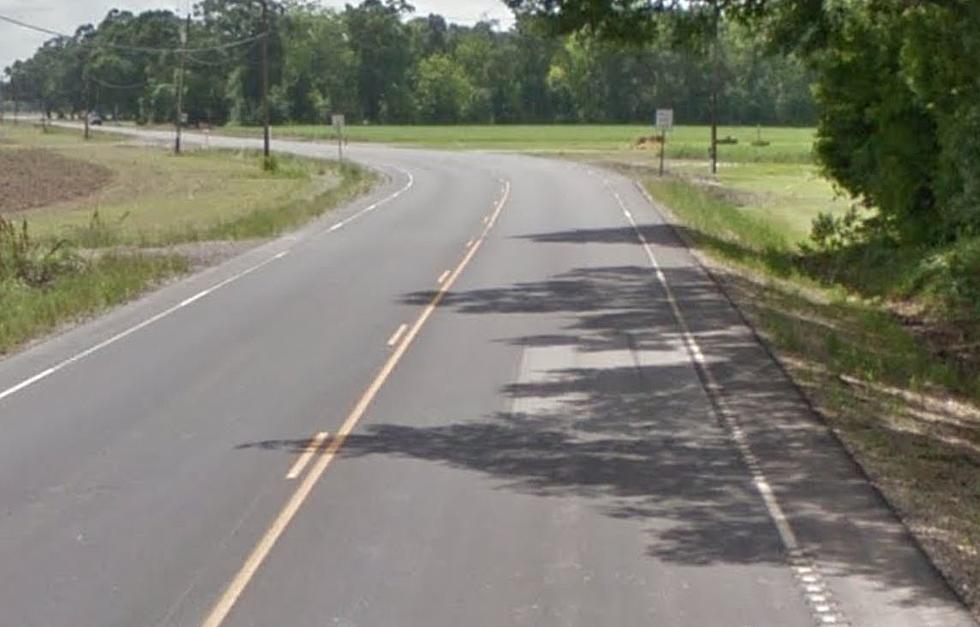
The study also looked at cost. For centerline rumble strips on Louisiana’s urban two-lane roads, the benefit-to-cost ratio came out at 38.27-to-1. For every dollar spent on installation, the state avoided nearly $38 in crash-related costs: medical care, emergency response, property damage, and lost productivity. The researchers’ recommendation was straightforward — install them wherever financially feasible, and where the budget runs short, prioritize by crash frequency and risk.
What Louisiana DOTD Has Been Doing
DOTD started a statewide centerline rumble strip push in 2010, targeting more than 2,100 miles of state highways using federal Highway Safety Improvement Program money. Projects rolled out across every DOTD district that year.
For Acadiana, the 2010 effort covered over 205 miles of state highways in Acadia, Evangeline, Iberia, Lafayette, St. Landry, St. Martin, and Vermilion parishes. The work has continued since. A project underway as of January 2026 was installing strips along about 20 miles of Greenwell Springs Road. A $1.86 million project announced in spring 2025 brought new strips and updated pavement striping to rural highways in Lincoln, Morehouse, Ouachita, Richland, and Union parishes.
“Driving distracted, speeding, not wearing your seatbelt — these are all common problems across the state,” DOTD spokesperson Rodney Mallett told WBRZ in January 2026. “We’re putting down the rumble strips and the stripes to help safety and help people pay attention.”
Why Some Roads Don’t Have Them
If the numbers are that good, why aren’t they everywhere? Several real-world constraints make installation impractical or counterproductive on certain roads.
Narrow shoulders. Shoulder rumble strips require enough pavement width to be placed where they won’t push cyclists into traffic or leave drivers with nowhere to go in an emergency. The FHWA recommends at minimum eight feet of clear shoulder after strip placement. Many Louisiana parish roads and older state routes simply weren’t built with shoulders wide enough to accommodate them safely.
Bicycle traffic. On roads where cyclists regularly ride, continuous shoulder strips can be a hazard. Hitting the grooves on a narrow tire can knock a rider off course. Engineers can build in gaps — typically a 10-to-12-foot break every 40 to 60 feet — but that adds design complexity, and on some routes the shoulder strip is skipped entirely.
Noise near homes and businesses. Rumble strips generate noise only when tires cross them, but in areas with high residential density, that frequent activation can become a neighborhood nuisance. State transportation agencies commonly discontinue strip installations before reaching urban zones — studies have found that ending strips about 650 feet before a residential area brings noise down to tolerable levels.
Pavement condition. Milled rumble strips are cut directly into the road surface. Installing them in pavement that already shows significant cracking, rutting, or deformation can accelerate deterioration. DOTD engineers assess pavement condition before approving a rumble strip project, and roads that need resurfacing first may not receive strips until that underlying work is completed.
Road function and traffic volume. Research has consistently shown that rumble strips are most effective on higher-traffic corridors. On very low-volume rural roads where crashes are rare to begin with, the cost-benefit math may not pencil out the same way. DOTD and FHWA guidelines prioritize high-crash and high-traffic corridors first.
Why This Matters More in Louisiana Than Most States
The drowsy driving problem is worse here than in a lot of places, and that raises the stakes for this particular safety tool.
The Louisiana Highway Safety Commission points to a few reasons. The I-10 corridor sees an unusually high volume of commercial truck traffic. The oil, gas, and petrochemical industries run 24/7 shifts with workers putting in 12-plus hours at a stretch. Healthcare and law enforcement add more fatigued drivers to the mix at all hours. From 2020 through 2024, 58 Louisiana crashes with a fatality were directly tied to drowsy driving.

That number is almost certainly an undercount. Police can identify impairment at a crash scene, but fatigue is harder to measure and easier to miss. The AAA Foundation for Traffic Safety estimates drowsy driving may be a factor in as many as 17.6 percent of all fatal crashes nationally, many times higher than what official reports capture.
Rumble strips are one of the few countermeasures built specifically for fatigued drivers. Painted lines, reflective markers, and warning signs all require a driver whose eyes are working and whose brain is registering what it sees. A rumble strip bypasses that. The alert is physical and immediate.
What the Strips on Your Drive Actually Sound Like
The tone and intensity of a rumble strip depends on how it is built. Milled strips cut into asphalt produce that deep, growling vibration most Louisiana drivers recognize on the rural interstates. Raised strips — built up from the surface rather than cut into it — generate a sharper, higher-pitched rattle.
Depth and width determine the intensity. Strips on high-speed rural highways tend to be cut deeper, where maximum alertness is the goal. Strips near neighborhoods are designed shallower, with the same wake-up function but less noise bleed into adjacent properties.
Gap patterns vary as well. On roads designed with cyclists in mind, the strips break at regular intervals. On limited-access highways where cyclists are not permitted, the pattern runs continuously.
You May Also Like...
- Louisiana Group Wins National Award for Stop Signs, Rumble Strips
- It's Not a Speed Trap: Why Louisiana Police Are Parking Like This on I-10
- Tired of Louisiana's Potholes? Here's Why Our Roads Are So Bad
- Fewer Fatal Crashes on Louisiana Roads, Report Says
10 Things Every True South Louisiana Driver Should Keep in Their Car
Gallery Credit: Joe Cunningham
