

Acadiana Owns Most of Louisiana’s Iconic Foods, From Scott Boudin to Breaux Bridge Crawfish to Prudhomme’s Blackened Redfish
LAFAYETTE, La. — Anybody who lives in Louisiana long enough notices the same pattern. Outsiders writing about Louisiana food usually miss something. The list runs too short, the spelling is off, somebody calls a snoball a snow cone, or the whole story stops at the French Quarter line and never looks west.
Food Network’s “States’ Plates” rundown of Louisiana’s most iconic eats, written by Erin Zimmer, gets it more right than most. The list runs 21 dishes deep, and a lot of those entries point right back at Acadiana. Boudin from Best Stop in Scott. Cracklins from Don’s Specialty Meats two miles down the road. Red beans from Creole Lunch House right here in Lafayette. The piece even calls Lafayette “the capital of Cajun country,” which is the rare moment a national outlet gets the geography right.
So how does the rest of the list hold up, and what would a Lafayette eater want to add or argue with?

What Acadiana Eaters Need to Know About the Food Network List
The full Food Network feature stretches across 21 dishes. Some are pure New Orleans, some are pure prairie Cajun, and a handful belong to the whole state.
Jambalaya. Rice, meat, and the holy trinity of onion, celery, and bell pepper. Food Network traces the dish’s roots to the late 1700s, when Spaniards in New Orleans were trying to cook paella without saffron and reached for tomatoes instead. Best version is still the one cooked in somebody’s backyard.
Beignets. Pillows of fried dough buried in powdered sugar. Café du Monde in the French Quarter is the global standard, open 24 hours, and you don’t leave without wearing some of the sugar home.
Po-boy. A Louisiana original, traced by historians to the 1929 New Orleans streetcar strike, when Bennie and Clovis Martin fed striking workers free sandwiches at their French Market restaurant. Fried shrimp, fried oyster, hot sausage, gravy-soaked roast beef. Order it dressed and ask no further questions.

Boiled crawfish. The Food Network piece names Lafayette as the capital of Cajun country and lists Cajun Claws and Hank’s as local favorites, but the dish has its own capital just up the road. The Louisiana Legislature designated Breaux Bridge the Crawfish Capital of the World in 1959, and the Breaux Bridge Crawfish Festival has been running every May since 1960.
Muffuletta. Round sesame loaf, olive salad, layered cured meats and cheeses. Central Grocery in the Quarter is the place of origin and still the benchmark.
Blackened redfish. This one is ours. Chef Paul Prudhomme grew up on a sharecropper farm outside Opelousas, the youngest of 13, and he created blackened redfish in March 1980 at K-Paul’s Louisiana Kitchen in New Orleans. The dish caught on so fast it nearly emptied the Gulf of redfish, and commercial fishing limits followed.
Doberge cake. Pronounced “dough-bash.” Six or eight thin yellow cake layers with chocolate or lemon pudding between each one and a fondant shell on top. A New Orleans original from the 1930s.
Cracklins. The Cajun answer to the pork rind. Food Network sends people straight to Don’s Specialty Meats in Scott, and they’re not wrong. Best Stop, a couple miles down the same exit, would take issue with the ranking.
Crawfish Monica. Rotini, crawfish tails, butter, cream, and Cajun seasoning. Created in the early 1980s by Chef Pierre Hilzim of Kajun Kettle Foods, who named it for his wife, Monica Davidson. Famous as a Jazz Fest staple since 1983, now also sold at Rouses and other Louisiana grocers.
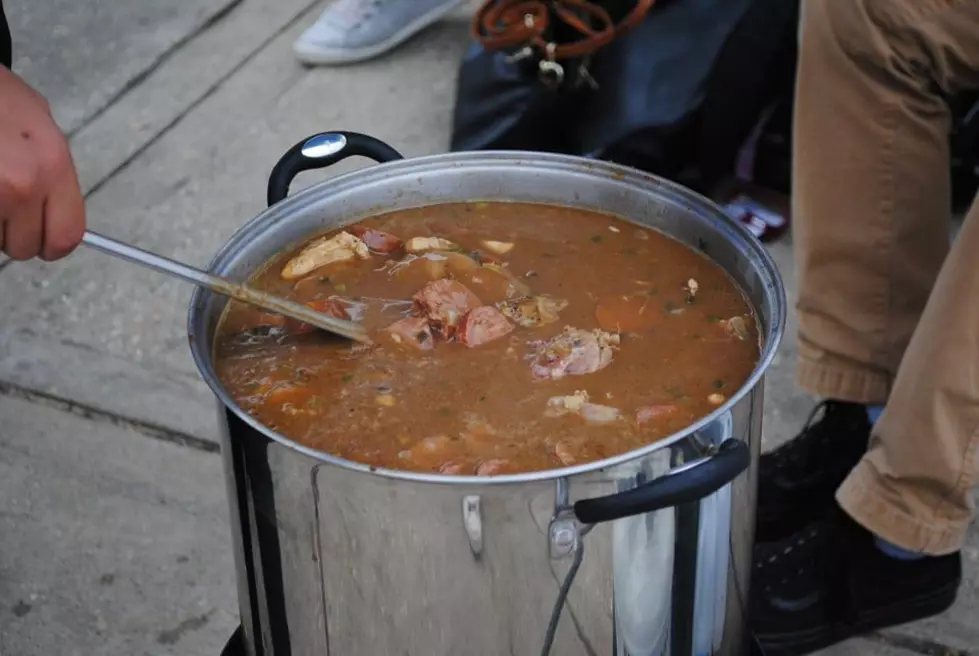
Gumbo. Louisiana’s official state cuisine. Roux first, then the trinity, then chicken and andouille or seafood depending on what’s around. There is no single right way and saying so out loud will start an argument.
King cake. Mardi Gras only. Ring-shaped, sprinkled in purple, green, and gold sugar, with a tiny plastic baby hidden inside. Whoever finds the baby buys the next one.
Red beans and rice. Monday tradition going back to the 19th century, when wash day kept cooks at the stove and a slow-simmered pot of beans made sense. Food Network points lunch-hungry travelers to the Creole Lunch House in Lafayette, which is open weekday lunch only and earns the trip.
Pralines. Pecans, cream, sugar, butter. Pronounced “prah-leen,” not “pray-leen.” Sold on the streets of the French Quarter going back to the 1800s.
Étouffée. French for “smothered.” Crawfish or shrimp in a roux-based sauce over rice. According to the City of Breaux Bridge, crawfish étouffée was created in Breaux Bridge restaurants. St. Martin Parish has the receipts.
Snoball. Not a snow cone. The ice is shaved fine enough to feel like soft serve, and the syrup options run from Wedding Cake to Satsuma to Praline Cream. Anybody who calls it a snow cone gets corrected, kindly.
Boudin. Pork, rice, onions, and seasoning stuffed into a casing. Food Network names Best Stop market in Scott as the place to start, and the Louisiana Legislature backed the geography up in 2012 by designating Scott the Boudin Capital of the World. Boudin balls, the fried bite-size cousin, are also on the menu and worth ordering by the dozen.
What Else Should Have Made the Cut
The original short list circulating around Louisiana food blogs tends to stop at 16 dishes. The Food Network feature goes further, and a few of those extras deserve a look:
- Ya-ka-mein, a New Orleans soup of beef broth, spaghetti, hard-boiled egg, and green onion, also known as “Old Sober” for its hangover-curing reputation.
- Cochon de lait, a whole young pig roasted slowly over an open fire. The phrase is French for a suckling pig still nursing, and it’s a Jazz Fest staple at Walker’s Southern Style BBQ.
- Friday fish fry during Lent, served at churches across South Louisiana.
- Turtle soup at Commander’s Palace, thick and dark and finished with a drizzle of sherry.
- Grillades, pounded steak medallions in tomato gravy over grits, a New Orleans brunch standard.
What an Acadiana eater would still flag as missing: a proper plate lunch with smothered pork chops, a real pork roast po-boy from a meat market that bakes its own bread, andouille from the smokehouse, and a tasso ham worth seasoning a pot of beans with. Those don’t always travel well into national magazines. They are still part of the bedrock here.
Where to Eat the List in Acadiana
Tourists chasing this list usually fly into Louis Armstrong International and never leave Orleans Parish. Locals know better. A weekend on I-10 with Scott just west of Lafayette and Breaux Bridge just east, plus a swing up I-49 to Opelousas, can knock out boudin, cracklins, crawfish, étouffée, red beans and rice, and a snoball without ever crossing the Atchafalaya. The food was built here. So were a lot of the people who put it on the national map.
If somebody outside Louisiana asks where to eat in the state, point them west of New Orleans for a change. Best Stop, Don’s, Creole Lunch House, Café Des Amis on a Saturday morning in Breaux Bridge, and any seafood market with a “they nice” answer to the right question will do more for their education than another beignet.