Controversial Plan to Steer Hurricanes – Would That Work For Louisiana?
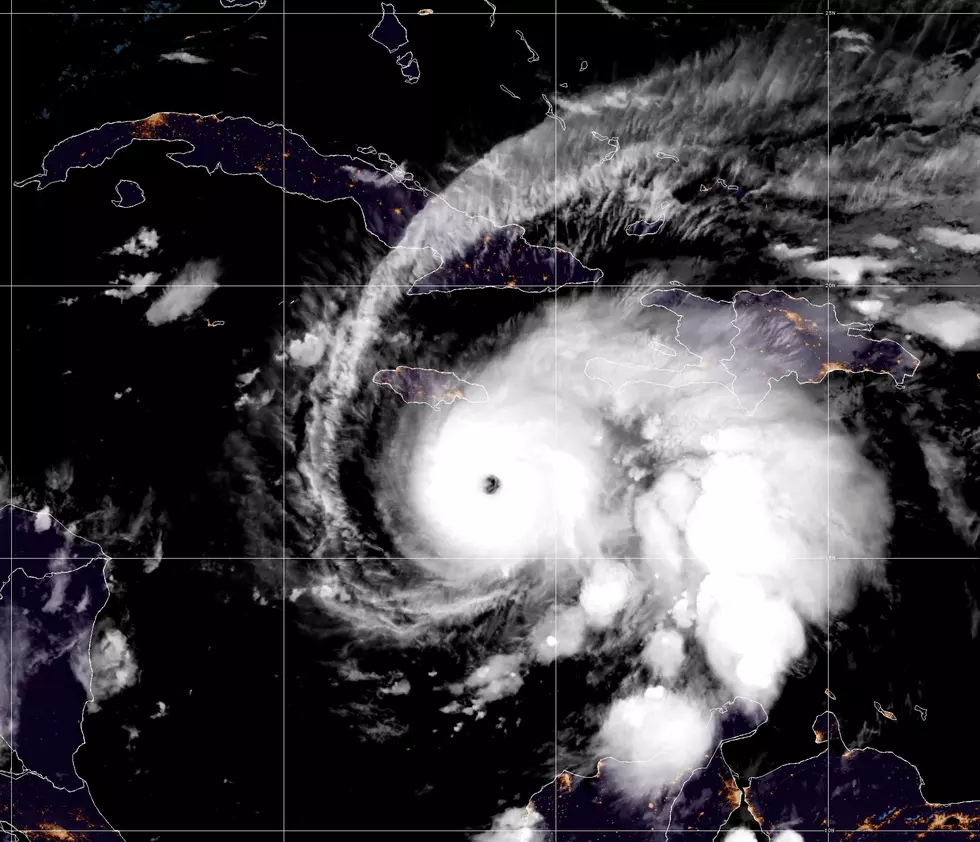
(KMDL-FM) In Louisiana and along the Gulf Coast, we have a vested interest in the current conversations among weather scientists about steering hurricanes. The concept of guiding something as massive as a hurricane might sound like it's ripped from the pages of science fiction, but there is growing evidence that human intervention could change the course of the mighty storms. But maybe the bigger question is just because we can, should we?

One thing we do need to realize is that the "steering" or guidance of a hurricane or any tropical system is not self-generated. Hurricanes don't have motors or "environmental outboards" that power them along on a particular path. They, like leaves floating in a pond, are at the whims of air currents, water temperatures, and even the currents of the ocean.
Is It Even Possible to Steer Something as Massive as a Hurricane?
So, since mankind can't move the storm, maybe we can affect the factors that do. And that is what the current debate among tropical scientists appears to center around. But hurricanes aren't the only extreme weather events that scientists believe can be changed by human intervention.
READ MORE: 10 Weather Myths We've All Fallen For
Some scientists involved in discussions about the concept were noted in the journal PLOS Water as suggesting the proposed technology could have raised the frigid temperatures of that Texas winter storm in 2021 by nearly 20 degrees, and reduced flooding in California caused by an "atmospheric river" in 2022.
In that same publication, scientists believe that cloud seeding, done precisely and with exact timing, could have changed the course of Super Storm Sandy by some 300 miles. That would have moved the storm's greatest impacts away from major population centers.

There is proof that cloud seeding, which is a process in which tiny particles such as silver iodide or salt crystals are introduced into a weather system, giving water molecules in that system a nucleus to condense and form water droplets around, can work on a small scale.
Weather Jiu-Jitsu: That's How Scientists Will Steer Hurricanes
But some members of the scientific community say there is no scientific evidence that the process would work on larger weather systems. But supporters of the idea say the proposal would be similar to the martial art of jiu-jitsu. In that discipline, a smaller, weaker opponent can overcome a larger, stronger opponent by using leverage and weight distribution.
The plan being discussed suggests, we're paraphrasing in very elementary terms, that by leveraging rainfall and the timing of when that rain falls, storm systems could be manipulated to either change course or decrease in intensity.

Currently, cloud seeding is being used in California, Colorado, Idaho, Nevada, New Mexico, North Dakota, Texas, Utah, and Wyoming. Those states use the process to enhance the snow pack in the winter, thereby adding to the fresh water supply when the snow melts.
Florida and Tennessee are the only two states that have banned the practice. We should note that nearly two dozen other states are actively discussing the aspect of banning the practice, so that number will likely increase.
The other aspect of the proposal, which might be even more difficult and controversial, involves the timing of when the clouds would need to be seeded to disrupt a major weather system. To do that, computer models and artificial intelligence will have to become very precise, or else an attempt to make things better could make things exponentially worse.
Steering Hurricanes Brings Out a Unique Ethical Issue for Scientists and Governments
Then comes the question of ethics. Let's use this as an example. A strong storm is headed for the Greater Houston, Texas Metro. That is where millions of people live. If the storm could be nudged a couple of hundred miles to the east, where it crosses the coast near Lake Charles, Louisiana, there are fewer people in harm's way.
READ MORE: What Would Happen If We Didn't Have Hurricanes?
That might be good for Houston, but not good at all for Louisiana from Lake Charles to Morgan City. Who would be the final decision maker in a scenario like that? And what if the Mexican Government decided to employ the idea and nudge a storm further north into Texas? Then you'd have an international incident instead of just an ethical dilemma.

I would not want that responsibility, but one day it might come down to an elected official acting like a Roman Emperor at a gladiator duel, giving a thumbs up for one town and a thumbs down to another. Stay tuned, this story is far from over.
Hurricane Landfall Probabilities Revealed: Parish-by-Parish Breakdown
More From News Talk 96.5 KPEL