Louisiana Challenges Core Voting Rights Act in Supreme Court Battle
Highlights
- Louisiana Attorney General Liz Murrill filed a 58-page brief with the Supreme Court arguing Section 2 of the Voting Rights Act is unconstitutional
- The Court reframed the Louisiana v. Callais case to address whether creating majority-minority districts violates the 14th and 15th Amendments
- Louisiana and Black voters must file briefs by August 27, with oral arguments scheduled for October 15, 2025
- Murrill argues that race-based redistricting "forces us to violate the federal Constitution" and creates an "untenable standard"
- If the Supreme Court agrees with Louisiana, it could significantly weaken the Voting Rights Act's protections against minority vote dilution
Louisiana Takes Unprecedented Stand Against Race-Based Redistricting Attorney General argues federal courts are forcing the state into constitutional violations by requiring majority-minority districts
BATON ROUGE, La. (KPEL News) — Louisiana has dramatically shifted its legal strategy in a high-stakes Supreme Court case, now arguing that a cornerstone provision of the Voting Rights Act is unconstitutional and should be struck down entirely.
According to The Advocate, Attorney General Liz Murrill filed a 58-page brief Wednesday with the U.S. Supreme Court, arguing that Section 2 of the Voting Rights Act forces states to violate the Constitution by sorting voters based on race. The move represents a significant escalation in Louisiana's longstanding opposition to race-based redistricting requirements.

What Louisiana Families Need to Know
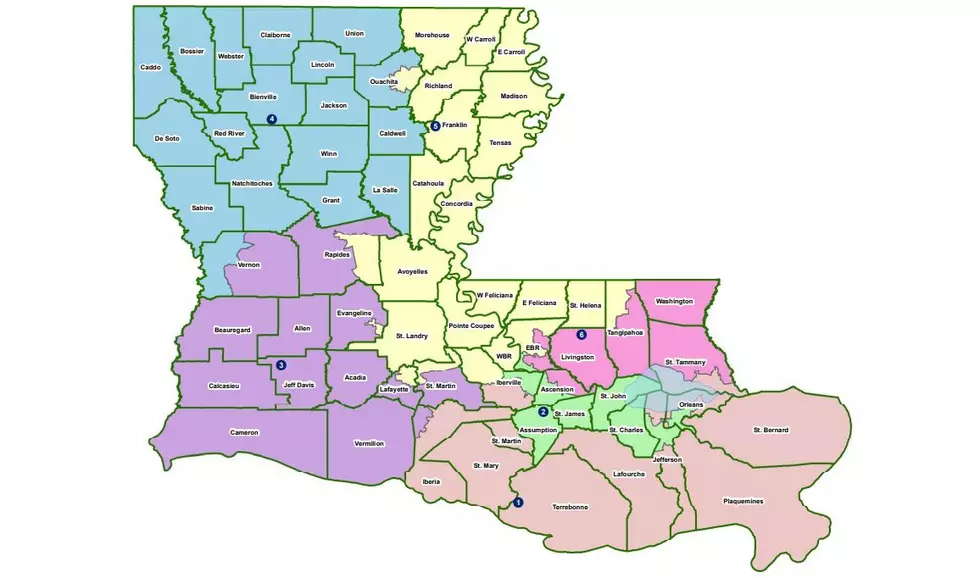
The case centers on Louisiana's congressional map that includes two majority-Black districts, which the state created "under protest" after federal courts ruled their original single majority-Black district violated voting rights protections.
"The Constitution forbids sorting voters by race. And telling legislators drawing maps to think about race, but not think too much about race, is an untenable standard," Murrill said in a statement.
The Attorney General's brief makes three central arguments against the current voting rights law:
Constitutional Violations: Louisiana argues that race-based redistricting violates the Equal Protection Clause by using "racial stereotypes" and causes harm to voters, states, and the nation.
Impossible Standards: The state contends federal courts create contradictory demands—requiring states to consider race enough to protect minority voting rights while not considering it too much to avoid constitutional violations.
Precedent Challenge: Murrill argues "the U.S. Supreme Court's redistricting jurisprudence needs to be drastically changed or overruled."
Supreme Court's Expanded Focus
According to SCOTUSblog, the Supreme Court made the rare decision in June to delay its ruling and schedule new arguments, asking parties to address whether Louisiana's "intentional creation of a second majority-minority congressional district violates the Fourteenth or Fifteenth Amendments to the U.S. Constitution."
This reframing significantly expands the scope of what was initially a narrower redistricting dispute, potentially putting core Voting Rights Act protections at risk.
"This is on the surface a fairly easy case factually to decide," says Michael Li, a redistricting expert at the Brennan Center for Justice at New York University School of Law. "The Supreme Court almost never holds over cases for argument. And the fact that it's doing so in this case is puzzling."
Louisiana's Legal Evolution
According to the Louisiana Illuminator, Louisiana's position has evolved significantly throughout this litigation. The state "reluctantly drew a second majority Black district in 2024 in response to a federal judge ruling the state violated the Voting Rights Act with its 2022 map."
Previously, Louisiana defended the maps under existing Supreme Court precedent, but now argues that "by requiring state legislatures to draw maps that sort voters by race, it forces us to violate the federal Constitution."
The state's brief reveals Louisiana has consistently opposed race-based redistricting, even when complying with court orders. "We have made this argument for years, but the federal courts so far have refused to hear us. So, when they forced us to draw a new majority-minority district, we did so under protest," Murrill stated.
What Happens Next for Louisiana
Louisiana Solicitor General Benjamin Aguiñaga will present oral arguments before the nine justices on October 15, 2025. The case outcome will determine not only Louisiana's congressional map but potentially reshape how voting districts are drawn nationwide.
John Bisognano, president of the National Redistricting Foundation, warns that "if the Court decides to now undo that precedent, it would be a head-spinning reversal of itself," referring to the Court's 2023 decision in Allen v. Milligan that upheld similar Voting Rights Act protections.
Broader National Implications
Louisiana's challenge is part of a broader conservative effort to weaken the Voting Rights Act. As reported by the Louisiana Illuminator, Republican attorneys general from 14 states filed supporting briefs last year arguing Section 2 is unconstitutional.
According to CenLaNews, Congressman Cleo Fields, who represents Louisiana's newly created majority-Black district, criticized the Attorney General's position, arguing she should "be willing to defend the work of the people's representatives."
Alternative Constitutional Protections
Murrill argues that if Section 2 were ruled unconstitutional, "Black voters could still count on the Equal Protection Clause of the 14th Amendment to the U.S. Constitution." However, civil rights advocates note this would significantly weaken protections against minority vote dilution.
The Supreme Court's decision, expected by June 2026, could fundamentally alter how congressional and legislative districts are drawn across America, ending nearly six decades of Voting Rights Act protections or reaffirming their constitutional foundation.
"Our Constitution sees neither black voters nor white voters; it sees only American voters," Murrill concluded.
8 Hidden Gem Restaurants in Lafayette
Gallery Credit: Joe Cunningham
More From News Talk 96.5 KPEL