

Louisiana Homeowners: 5 Things Your Hurricane Insurance Probably Does Not Cover
LAFAYETTE, La. — Tropical Storm Arthur showed up early this season, and while it did not bring the catastrophic destruction of a Katrina or an Ida, it exposed something Louisiana homeowners face every hurricane season: most people have no clear picture of what their insurance policy actually covers until they are standing in a damaged home trying to sort out who pays for what.
The gap between what Louisiana homeowners think they have and what they actually have is wide. Right now, while the tropics are quiet and no named storm is pushing toward the Gulf, is the time to close it.
Once a named storm enters the Gulf of Mexico, insurers freeze new policies and changes. You cannot buy flood insurance, increase coverage, or switch carriers until the threat passes, according to Chabert Insurance. That is a hard stop that catches Louisiana homeowners off guard every single season.

The Biggest Myth in Louisiana Home Insurance
The most dangerous thing a Louisiana homeowner can believe is that their standard homeowners policy covers everything a tropical storm or hurricane throws at a house. It does not cover everything, and the largest gap is one most people do not find out about until after the water is already in their home.
Standard homeowners insurance explicitly excludes all flood damage, regardless of how severe the storm or how much water enters the home. If rain, storm surge, rising rivers, or overflowing drainage systems push water into your house, your homeowners policy pays nothing. No percentage, no partial coverage, no exceptions for major storms.
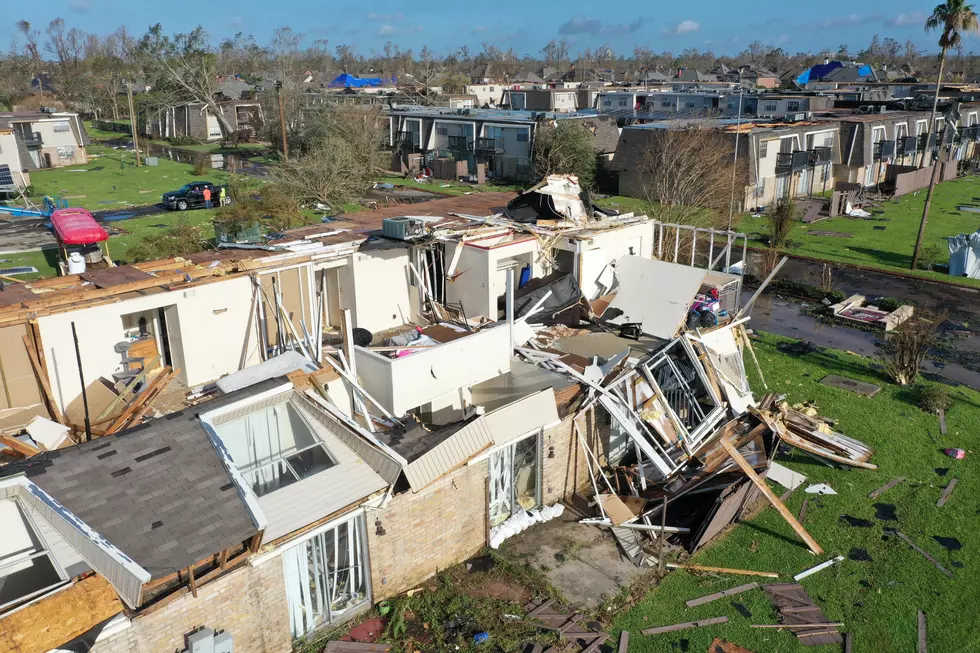
This is the coverage gap that devastates Louisiana families after major storms. Roughly a quarter of flood claims in Louisiana come from properties outside designated high-risk flood zones, according to Chabert Insurance of Baton Rouge. You do not need to live on a bayou or in a low-lying neighborhood to flood. A clogged drainage canal, an overtaxed pump station, or 10 inches of rain in six hours can put water in any home in Acadiana.
Wind vs. Flood: The Distinction That Can Cost You Everything
Your standard homeowners policy does cover wind damage. If a storm pushes a tree through your roof, tears shingles loose, or shatters a window, that is a wind claim.
Rain that enters your home through a wind-damaged opening is generally covered under your homeowners policy. Rain that enters because water is rising from the ground is flood damage, and flood damage is not covered.
Storm surge is classified as flood, not wind. When Gulf water pushes inland and enters your home, that is a flood event under your policy, and your homeowners policy does not cover it. That distinction matters enormously for anyone living along or near the Louisiana coast.
Wind-versus-flood disputes are among the most common sources of post-hurricane claim conflicts in Louisiana. Insurers and policyholders frequently disagree about whether water entered through a wind-damaged opening or through inundation from below, according to Joubert Law Firm. Documenting your home thoroughly before any storm arrives is the most practical defense a homeowner has in that dispute.
What Your Hurricane Deductible Actually Means
Most Louisiana homeowners know they have a deductible. Many do not realize they may have two: a standard deductible for most claims and a separate, higher hurricane or named-storm deductible that activates when the National Hurricane Center officially names a storm.
That second deductible is almost always expressed as a percentage of your dwelling coverage rather than a flat dollar figure. On a $300,000 home, a 2 percent hurricane deductible means you pay the first $6,000 out of pocket before your insurer covers anything. A 5 percent deductible on that same home means $15,000 comes out of your pocket first. Many Louisiana policies fall somewhere in the two-to-five percent range, according to Chabert Insurance.
Pull your declarations page out and find that number. Then ask yourself whether you have that amount set aside and accessible. If you do not, that is the first gap to address.
Flood Insurance: The Policy Most Louisiana Homeowners Still Do Not Have
Flood coverage comes from one of two sources. The first is the National Flood Insurance Program, run by FEMA. NFIP policies are standardized, widely available, and cover up to $250,000 for the structure and $100,000 for contents. The second option is private flood insurance, which often offers higher coverage limits and, in some cases, shorter waiting periods.
The waiting period matters more than most people realize. NFIP policies carry a 30-day waiting period before coverage takes effect. Buy a policy on June 1, and you are not covered until July 1. The main exception is for policies purchased as part of a loan closing, such as buying or refinancing a home, where coverage takes effect immediately. FEMA also provides a reduced one-day waiting period for homes newly mapped into a Special Flood Hazard Area, as long as the policy is purchased within 13 months of the map change.

Outside those circumstances, the 30-day rule applies. Private flood insurers often have shorter waiting periods, typically around two weeks, and some offer no waiting period at all for qualifying situations, which is worth asking about when comparing options.
Flood insurance is not cheap in Louisiana. FEMA’s Risk Rating 2.0 system prices policies based on property-specific data including your home’s elevation, distance to water, and estimated cost of reconstruction rather than broad flood zone maps. Some homeowners who previously thought they were in low-risk zones have seen adjustments under this model, according to ADDvantage Insurance. Checking your current flood risk at FEMA’s Flood Map Service Center is a free step worth taking before the season picks up.
The Mold Problem Louisiana Homeowners Overlook
Louisiana’s climate creates conditions for mold growth even without a major storm. Add storm damage, delayed repairs, and the sustained moisture that tropical systems bring, and mold becomes a serious threat to both your home’s structure and your family’s health.
Standard homeowners policies in Louisiana typically limit or exclude mold damage, according to Covered. The exclusion is not always clearly written. Policies may cover mold remediation resulting from a covered wind event, but they often cap that coverage well below what remediation actually costs after a significant storm.
Ask your insurer whether your policy includes a mold endorsement and what it would cost to add one. In Louisiana’s humid environment, that endorsement deserves serious consideration.
Additional Living Expenses: Do You Know Your Limit?
If your home becomes uninhabitable after a storm, your homeowners policy likely includes Additional Living Expenses coverage, also called Loss of Use. ALE pays for hotel stays, meals, and temporary housing while your home is being repaired.
ALE coverage has limits in both dollar amount and duration. After a major hurricane, temporary housing across South Louisiana and Acadiana fills up fast and prices spike sharply. A family displaced for several months can exhaust an ALE limit that looked reasonable on paper well before their home is ready to move back into, according to the National Association of Insurance Commissioners.
Look at your ALE limit and think honestly about whether it would cover your family for two, four, or six months of displacement in a tight rental market.
What Louisiana Homeowners Can Do Right Now
Several concrete steps are available before the next storm develops.
The Louisiana Fortify Homes Program is offering 3,000 grants of up to $10,000 for homeowners who upgrade their roofs to the FORTIFIED standard developed by the Insurance Institute for Business and Home Safety. Registration for the current round runs through 5 p.m. on June 19, 2026. Five parishes are newly eligible for the first time this round: Acadia, Iberville, Jefferson Davis, Lafayette, and Washington. Expanded portions of Ascension, Calcasieu, Iberia, Livingston, St. Martin, St. Tammany, Tangipahoa, and Vermilion parishes that were previously excluded are also now eligible, according to WBRZ. Homeowners can confirm their address against the official eligibility map at FortifyHomes.La.Gov before registering.
Beyond storm protection, a FORTIFIED roof qualifies for insurance premium credits. Louisiana Regulation 136, promulgated by the Louisiana Department of Insurance on April 29, 2026, establishes mandatory FORTIFIED discount benchmarks for all authorized property and casualty insurers in the state. The benchmarks apply to the hurricane portion of your premium and range from 16 to 49 percent depending on your location in the state and your FORTIFIED designation level. All insurers are required to implement those discounts for new and renewed residential policies beginning January 1, 2027, according to Insurance Business. Many carriers already offer voluntary FORTIFIED discounts ahead of that deadline.
Before the next storm season accelerates, document what you own. Record a video walkthrough of every room, open closets and cabinets, and narrate what you see. Photograph serial numbers on electronics and appliances. Store those records in cloud storage, not in a filing cabinet that could end up underwater. Keep a digital copy of your declarations page somewhere accessible if you have to leave your home in a hurry.
What You Cannot Do Once a Storm Is Named
Once a named storm enters the Gulf of Mexico, most Louisiana insurers will not allow you to buy a new policy, increase your coverage limits, lower your deductible, or switch carriers. Those options are off the table until the threat passes. Coverage decisions have to be made before the National Hurricane Center starts drawing track models toward the Louisiana coast, not after.

If you have questions about your policy, call your agent this week. Ask specifically about your hurricane deductible, your flood coverage status, whether you carry a mold endorsement, and what your ALE limit covers. A 15-minute conversation now could prevent thousands of dollars in uninsured losses after a storm.
The Louisiana Department of Insurance Consumer Helpline is available at 1-800-259-5300 for homeowners with coverage questions or disputes with an insurer.
Louisiana homeowners can apply for the Fortify Homes Program through June 19 at FortifyHomes.La.Gov. The Louisiana Department of Insurance Consumer Helpline is 1-800-259-5300.
You May Also Like...
- NFIP Lapse: 500,000 Louisiana Families Now Without Flood Insurance Options in Government Shutdown
- Louisiana Fortify Homes Program Returns With $10K Grants
- Louisiana Home Insurance Costs Soar in 2025: Tips to Save
20 Items You Need to Have in Your ‘Hurricane Box’
Gallery Credit: TSM Lafayette
