
Early Voting Numbers Show Louisiana Voters Aren’t Showing Up for Senate Run-Offs
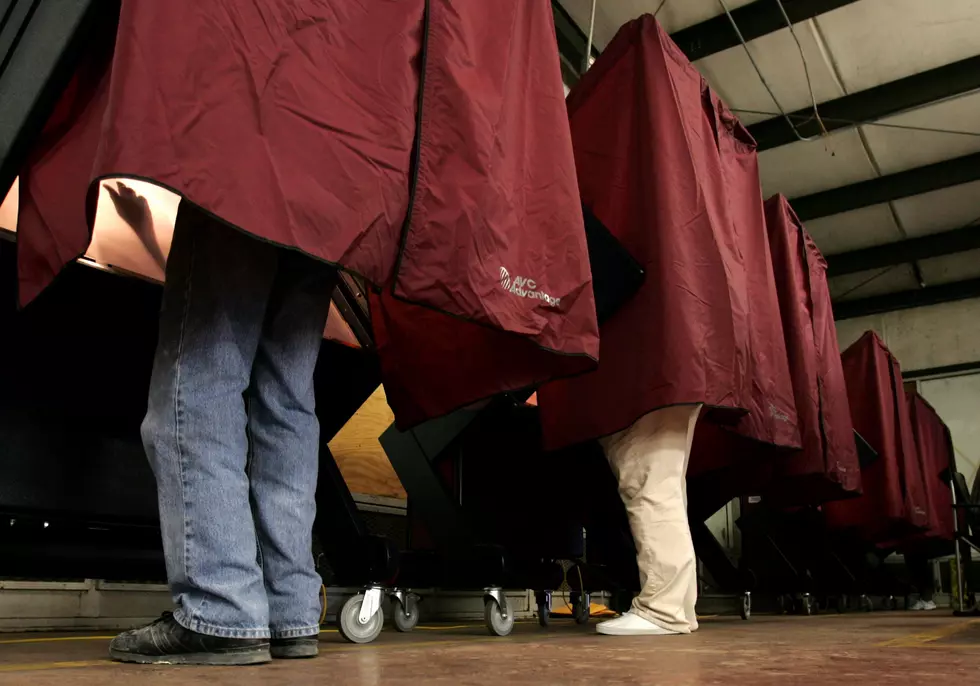
LAFAYETTE, La. — More than 151,600 Louisiana voters cast early ballots ahead of Saturday’s U.S. Senate party runoffs, according to figures from the Louisiana Secretary of State. That sounds like a solid number until you stack it against May — and then the story changes.
Baton Rouge pollster John Couvillon, who is working for Republican candidate John Fleming, says the early voting pace points to overall June 27 turnout landing around 15% statewide. The May 16 primary drew 28% turnout. That’s a sharp drop by any measure, and in races this tight, who doesn’t show up matters just as much as who does.

Republican Voters Leading, But Democrats Saw a Steeper Slide
The Secretary of State’s statewide early voting report, covering ballots cast through June 20, shows Republicans well ahead of Democrats in raw totals. Of the 151,637 early votes cast across all 64 parishes, 77,372 came from registered Republicans, against 54,194 from Democrats and 20,071 from voters outside either major party.
That Republican edge fits Louisiana’s current political reality. But Couvillon’s analysis adds an important wrinkle: the drop-off from May hit Democrats harder than Republicans. Fewer Democratic voters came back for the runoff, which could narrow an already thin playing field on that side of the ballot.

In the Democratic runoff, Jamie Davis — a Tensas Parish farmer who led the May 16 primary with roughly 47% — faces Gary Crockett, a New Orleans Navy veteran and business owner who pulled 26% that day. Davis has the endorsement of the Louisiana Democratic Party and New Orleans Mayor Helena Moreno. Orleans Parish remains the biggest engine for Democratic turnout in the state, logging 9,065 early votes through June 20, with 6,679 of those from registered Democrats — the highest Democratic early vote total of any parish statewide.
Where Acadiana Stands
Lafayette Parish posted 6,821 early votes through the close of the early voting window, the fifth-highest parish total in the state and the highest in Acadiana. Republicans cast 4,075 of those ballots, Democrats 1,929 — a roughly 2-to-1 margin that reflects where Lafayette has been trending in federal races for years now.
The surrounding parishes tell a similar story. St. Martin Parish logged 1,999 early votes, Republicans leading Democrats 1,230 to 560. St. Landry came in at 1,803, though the gap was tighter there — 894 Democrats to 748 Republicans — which lines up with that parish’s historically more competitive registration numbers. Vermilion Parish posted 1,751 early ballots at a 1,074-to-444 Republican advantage. Iberia Parish recorded 1,971, with Republicans leading Democrats 1,144 to 646.
The Republican Race: Much Closer Than Expected
The Letlow-Fleming runoff was supposed to be a formality. U.S. Rep. Julia Letlow came out of May with 44.8% of the vote to Fleming’s 28.3%, landed endorsements from both President Donald Trump and Gov. Jeff Landry, and has outspent Fleming badly. On paper, this race looked finished weeks ago.
It doesn’t look that way anymore. Two polls conducted by New Orleans pollster Greg Rigamer — both paid for by a Letlow supporter — show the race in a dead heat. A June 15-16 survey of 600 likely Republican runoff voters put Letlow at 40.2% to Fleming’s 38.2%. The week before, the same pollster had Fleming ahead, 40.3% to 37.7%. Both results fall within the margin of error.

Fleming’s appeal has been built largely around his opposition to carbon capture and sequestration — a technology that involves building pipelines to move carbon dioxide from industrial plants to underground injection sites. It’s an issue that cuts deep with Louisiana’s Republican grassroots, many of whom are suspicious of the industrial pipeline expansion it requires. The issue has enough pull that, according to The Advocate, Gov. Landry had to personally intervene last Saturday to stop 150 members of the state Republican central committee from breaking ranks and formally endorsing Fleming — over the candidate Landry himself is backing.
In a low-turnout runoff, intensity wins. Whether Fleming’s committed supporters show up Saturday in numbers that can overcome Letlow’s financial and institutional advantages is the question the rest of the race turns on.
How Louisiana Got Here
Saturday’s runoffs are the first Louisiana has run under its new partisan primary system. Gov. Landry signed House Bill 17 in January 2024, scrapping the jungle primary format Louisiana had used for federal races since 1978. Under the new rules, parties hold separate primaries, and any race where no one breaks 50% goes to a runoff. Whoever wins each party’s runoff meets in the November 3 general election.
The Republican nominee enters November as the clear favorite. Democrats haven’t won a U.S. Senate race in Louisiana since 2008, and the state has moved further right in each federal election cycle since. The open seat belongs to two-term incumbent Bill Cassidy, who was knocked out in May with just 24.8% of the vote — the price of his 2021 vote to convict President Trump in his second impeachment trial.
If you haven’t voted yet, polls open statewide at 7 a.m. Saturday and close at 8 p.m. Registered Republicans and Democrats are eligible, as are unaffiliated voters who participated in the May primary — they’ll get the same party ballot they selected then.
You May Also Like...
- Cassidy Is Out: Letlow and Fleming Will Meet in a June 27 Louisiana Senate Runoff
- You Can Still Vote May 16 in Louisiana — Just Not for Congress. Here's the Full Breakdown.
Remember These Awesome Stores No Longer in the Acadiana Mall in Lafayette, Louisiana?
Gallery Credit: Joe Cunningham
More From News Talk 96.5 KPEL