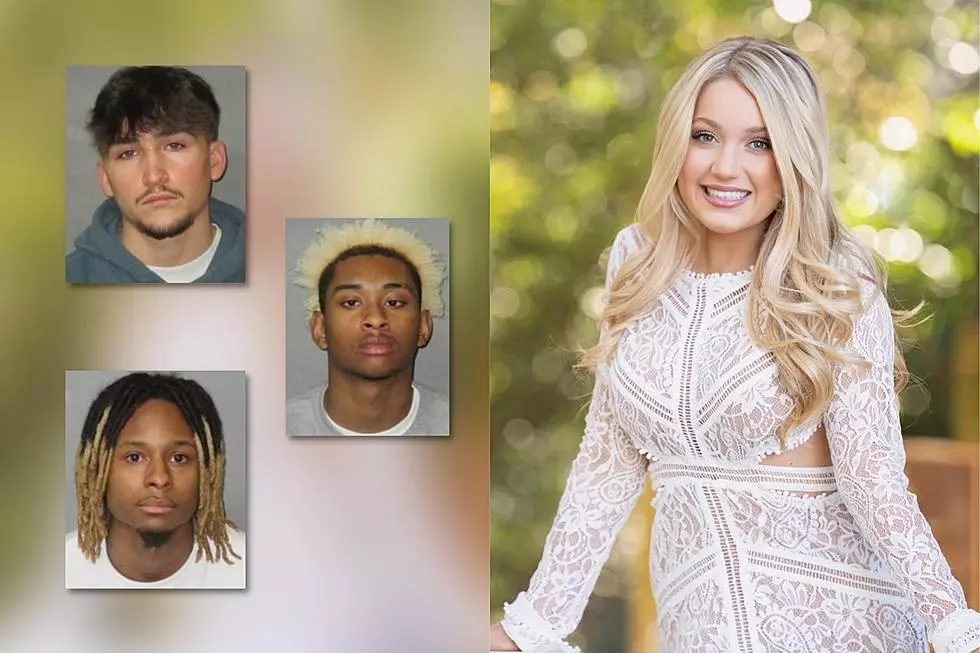

Judge Removed From Madison Brooks Trial After Defendant Claims ‘She Knows To Help Us’
Highlights
- Judge Gail Horne Ray was recused from Casen Carver’s December 1 trial after text messages suggested improper connections
- Carver texted his father, claiming the judge “knows to help us” because “her son was accused of rape a while back”
- Judge Brad Myers granted the recusal to “safeguard public confidence in the integrity and impartiality of the judiciary”
- Carver waived his right to a jury trial in September, so a judge will decide his fate on rape and video voyeurism charges
- Myers found no proven bias but said the circumstances could create the appearance of impropriety
Judge Recused in Madison Brooks Case Ahead of December Trial
A Baton Rouge judge has been removed from the Madison Brooks rape case after text messages from the defendant raised questions about her impartiality.
BATON ROUGE, La. (KPEL News) — Judge Gail Horne Ray will no longer preside over Casen Carver’s trial in the Madison Brooks rape case. Fellow 19th Judicial District Court Judge Brad Myers issued the recusal order Monday, less than a month before Carver’s December 1 trial on charges of first- and third-degree rape and video voyeurism.
The recusal comes down to text messages Carver sent his father that suggested an improper relationship with the judge and confidence she would rule in his favor. Myers wrote in his ruling that the texts created an appearance of impropriety requiring Ray’s removal, even though he found no evidence of actual bias.

What the Text Messages Revealed
The most damaging text came in February 2023, weeks after Brooks’ death. Carver wrote to his father: “And the judge we are getting, I think u know about but we are friends with her and she is really good for our case. Her son was accused of rape a while back so she knows to help us.”
Court records show Ray’s son, Nelson Dan Taylor Jr., was convicted in 1997 of two counts each of forcible rape and aggravated burglary when he was 17. Ray was one of his trial attorneys.
In December 2023, before a key pretrial ruling, Carver messaged that his defense attorney told him the outcome would be favorable: “Because you know I was stressed about today but he still says we are good and judge is on our side.”
After that hearing was postponed, Carver texted someone that “everything is good” and Ray had reset the hearing for the next week: “She had a problem opening all the discovery for the phones. But Joe said she is going to rule in our favor.”
When court resumed December 13, 2023, Ray ordered prosecutors to turn over videos that show the seconds around the alleged crime. Prosecutors had objected, saying some footage contained sexually explicit content from Brooks’ alleged rape.
Judge Myers’ Reasoning for Recusal
Myers said in his order that he found no evidence of actual bias or prejudice from Ray. He wrote: “The court knows Judge Ray to be a conscientious and hard-working judge who, because of her training and knowledge of the law, is fully capable of disregarding any information to which she has been exposed during pre-trial proceedings and making a fair and impartial decision on the admissible evidence.”

But Myers said the text messages, when viewed with all the other circumstances, required recusal. He called Carver’s statements “particularly concerning” and said they weren’t just “the ‘musings’ of a teenager who was hoping for the best outcome in his case.”
“These are affirmative statements that show Mr. Carver believed the judge ‘knew to help him’ because of an alleged friendship with him or someone he knew and the judge’s son’s interaction with the criminal justice system,” Myers wrote. “Likewise, an affirmative statement that the judge was ‘going to rule in our favor’ appears to be more than the mere hope that he gets a favorable ruling.”
Myers said the recusal was needed to “safeguard public confidence in the integrity and impartiality of the judiciary.”
The Madison Brooks Case Background
Madison Brooks was a 19-year-old LSU sophomore who died early on January 15, 2023, after a night of heavy drinking in Tigerland. Prosecutors say Brooks left Reggie’s Bar with four men and was sexually assaulted in a car before being dropped off in a subdivision. She was fatally struck by a vehicle while walking on Burbank Drive.
Brooks’ blood alcohol concentration was .319%, nearly four times the legal limit and at alcohol poisoning level. Toxicology reports also showed THC in her system.
Four men were arrested. Three—Carver, 21-year-old Kaivon Deondre Washington, and 20-year-old Desmond Carter—were indicted on aggravated rape charges. A fourth man, 28-year-old Everett Lee, was arrested and charged with principal to third-degree rape but was not indicted by a grand jury.
Carver was the driver. While he’s not accused of having sex with Brooks, he faces first- and third-degree rape charges as a principal, meaning prosecutors say he was present and helped the assault happen. He also faces a video voyeurism charge for allegedly recording parts of the incident.
If convicted of aggravated rape, Carver faces a mandatory life sentence.
What Louisiana Residents Need to Know About Principal Charges
Under Louisiana law, you can be charged with rape even if you didn’t commit the sexual assault. Principal to rape charges apply when someone is present during the assault and either helps it happen or fails to stop it when they could.
In Carver’s case, prosecutors say he drove the vehicle, provided the location for the assault, and allegedly recorded video of it. The video voyeurism charge stems from allegations that Carver used his phone to record intimate areas of Brooks’ body without her consent and for lewd purposes, then allegedly shared the video.
Controversy Surrounding Judge Ray’s Handling of the Case
This isn’t the first controversy over Ray’s involvement in the Madison Brooks case. Earlier this year, an appeals court ruled that Brooks’ sexual history couldn’t be used at trial, overturning Ray’s decision to allow it.
READ MORE: Appeals Court Rules Madison Brooks's Sexual History Can't Be Used By Defense
Defense attorney Joseph Long had filed motions to introduce evidence of a sexual encounter Brooks allegedly had with another LSU student the day before her death. Ray initially ruled the evidence could be admitted, but the First Circuit Court of Appeal reversed that, finding it violated Louisiana’s rape shield laws.

District Attorney Hillar Moore’s office argued that Ray’s exposure to this inadmissible evidence, combined with her prior rulings showing she thought it was relevant, hurt her ability to conduct a fair bench trial. The recusal motion became more urgent after Carver waived his jury trial in September, making Ray the only person who would decide his guilt or innocence.
Ray’s track record has drawn scrutiny beyond the Brooks case. In 2024, she made an unprecedented decision to vacate a 1972 rape conviction during a routine parole hearing, even though the defendant didn’t ask for it. The Louisiana Supreme Court later overturned her action.
What Happens Next for Baton Rouge Area Families
With Ray’s recusal, a new judge will be appointed to preside over Carver’s December 1 trial. The case will be a bench trial, meaning the new judge will decide Carver’s fate instead of a jury.
Defense attorney Joe Long said Monday he plans to appeal Myers’ recusal decision to the First Circuit Court of Appeal. “The recusal hearing was the first ruling in a long action,” Long told local media. “No matter who won the hearing, the other side was going to appeal, and no matter who wins at the Court of Appeal, the other side will appeal to the Supreme Court of Louisiana.”
Long said Myers found no bias or prejudice in Ray but ruled to recuse anyway. “We respect Judge Myers and the work he put into the opinion,” Long said. “We respectfully disagree with his ruling and will seek supervisory writs.”
District Attorney Moore praised Myers’ decision, saying it “reflects that he carefully considered the arguments, pleadings, and evidence filed into the record.” Moore said the recusal “is not based on any perceived bias or personal relations but based on the facts and law unique to this case.”
The case continues to draw attention across Louisiana, especially in Baton Rouge and the LSU community. Brooks’ mother, Ashley Baustert, has been vocal about seeking justice and expressed support for the recusal.
“My daughter’s case must be heard before an impartial judge—one untainted by any connection to the kind of violence that destroyed her life,” Baustert told Unfiltered with Kiran. “Anything less is a betrayal of justice.”
The trial is still scheduled for December 1, though any appeals of the recusal decision could affect that timeline. The two other defendants—Washington and Carter—are being tried separately and weren’t affected by Monday’s recusal order.
SEE ALSO: Baton Rouge Judge in Madison Brooks Case Ripped for Vacating Convicted Rapist's Sentence
Top 10 Worst Places to Live in Louisiana
Gallery Credit: Joe Cunningham
More From News Talk 96.5 KPEL