
After St. Landry Teacher’s Arrest, How Does Louisiana Law Treat AI-Generated Child Abuse Images?
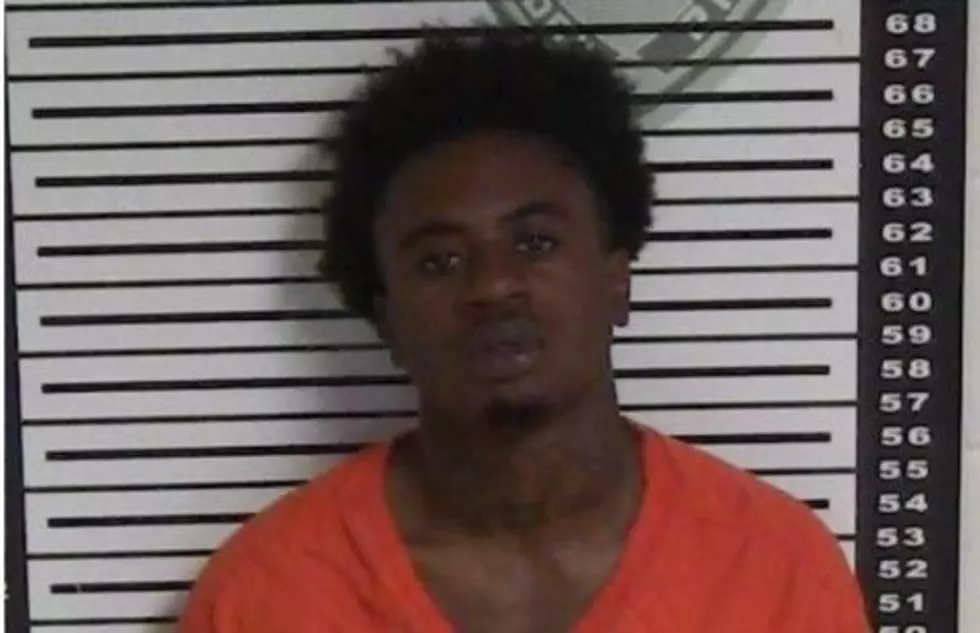
A St. Landry Parish teacher, Kristopher Richard, 39, of Breaux Bridge, was arrested Thursday, Nov. 19, on 108 counts tied to AI-generated sexual images, Attorney General Liz Murrill’s office announced. Louisiana law covers that conduct under two statutes: one for child sexual abuse material and one for unlawful deepfakes.
The most serious counts carry up to 99 years in prison.
Louisiana law treats an AI-generated image of a child as child sexual abuse material when a reasonable person would find it virtually indistinguishable from a real child. That definition took effect Aug. 1.

What is Kristopher Richard accused of?
Richard faces 100 counts of child sexual abuse material involving children under 13 (R.S. 14:81.1(E)(5)(a)). He also faces two counts of producing it (R.S. 14:81.1(E)(5)(b)) and six counts of unlawful deepfakes (R.S. 14:73.13).
Investigators say the case began with multiple cyber tips from the National Center for Missing and Exploited Children. They allege Richard used AI to create sexualized deepfake images of multiple individuals, plus AI-generated child sexual abuse material depicting children under 13. He allegedly uploaded the images, along with other child sexual abuse material, to his Yahoo account.
The Louisiana Bureau of Investigation, the St. Martin Parish Sheriff’s Office, the St. Landry Parish Sheriff’s Office, and Homeland Security Investigations worked the case. Richard was booked into the St. Martin Parish Jail. Bond information was pending.
The release does not name the school where Richard works. It also does not say who the deepfake images depict, whether any students are connected to the case, or when the images were created. The timing matters because several Louisiana AI laws took effect Aug. 1.
Is AI-generated child abuse material illegal in Louisiana?
Yes. The state’s child sexual abuse material statute, R.S. 14:81.1, makes it a crime to produce, promote, advertise, distribute or possess the material. Two 2026 laws, both effective Aug. 1, added AI provisions.
Act 892 (Senate Bill 42, by Sen. Rick Edmonds, R-Baton Rouge) adds AI-generated and digitally created images to the definition of a child when they look virtually indistinguishable from a real child under 17. It also defines “produce” to include causing AI to generate the material. Separately, the statute says the child depicted does not have to be a real person.
Act 211 (Senate Bill 110, by Sen. Heather Cloud, R-Ville Platte) makes it unlawful to use an image of a real person under 17, or an image that appears to show one, with the intent to train an AI model to produce this material. Cloud said in the Attorney General’s announcement of the law: “Criminals cannot hide behind artificial intelligence by claiming ‘AI did it.’”
Lafourche Parish deputies arrested a middle schooler in August 2025 on accusations of making fake nude images of classmates. The case led Edmonds to file his bill.
What are the penalties for AI-generated child sexual abuse material?
Penalties are set in tiers under R.S. 14:81.1(E), and each count carries its own range.
Possession or distribution: A first offense carries 5 to 20 years at hard labor and a fine up to $50,000. A second offense carries 10 to 40 years and a fine up to $75,000. Both are served without parole, probation, or suspension.
Production, promotion or advertising: A first offense carries 10 to 20 years and a fine up to $50,000. A second offense carries 20 to 40 years and a fine up to $75,000. Both are served without parole, probation, or suspension.
Possession or distribution, victim under 13: For an offender 17 or older, the sentence runs from one-half to twice the longest term for the base offenses. With a longest term of 40 years, that works out to 20 to 80 years at hard labor, without parole, probation, or suspension.
Production or promotion, victim under 13: For an offender 17 or older, 25 to 99 years at hard labor, with at least 25 years served without parole, probation, or suspension.
After either under-13 sentence ends, the offender is monitored electronically for life. Richard’s 102 child sexual abuse material counts are charged under the under-13 provisions.
What is an unlawful deepfake under Louisiana law?
R.S. 14:73.13 took effect in 2023. It defines a deepfake as audio or visual media created or altered so it would falsely appear authentic to a reasonable observer, or that replaces one person’s likeness with another’s. Satire, parody, news, and clearly labeled material are excluded.
Creating or possessing a deepfake of a minor in sexual conduct carries 5 to 20 years at hard labor, a fine up to $10,000, or both. At least five years must be served without parole, probation, or suspension. The statute defines a minor as anyone under 18, a year older than the cutoff in the child sexual abuse material law.
Distributing, exhibiting, exchanging, promoting, or selling a sexual deepfake of any person without consent carries 10 to 30 years and a fine up to $50,000. If the person depicted is a minor, at least 10 years must be served without parole, probation or suspension.
Act 782 added an educator enhancement this year. An educator who commits the offense against a student can receive up to two more years, served consecutively. The law defines an educator as school staff working at the victim’s school or school system, and a student as someone under 17 enrolled in a Louisiana school. The release on Richard’s arrest does not say whether any students are involved.
What else did Louisiana change in 2026?
Act 782, known as the Ivy Daniels Act (House Bill 119, by Rep. Bryan Fontenot, R-Thibodaux), made three other changes.
It raised the penalty for sharing or selling AI-created nude images of another person from up to six months and $750 to up to one year and $1,000. The crime requires intent to coerce, harass, intimidate, or maliciously share or sell the image. If the person depicted is under 17, the penalty is up to five years, with at least one year served without parole, probation, or suspension.
It created a new crime, R.S. 14:73.15, for knowingly possessing an AI-created nude image of a person under 17 without being licensed or authorized to have it. The penalty is up to five years, with at least one year served without benefit. Offenders under 14 are handled under the Children’s Code.
It also requires public schools to give students in grade six and up information on these crimes during the first five days of each school year. Parents sign a form acknowledging they received it.
Act 496 (Senate Bill 346, by Sen. Regina Barrow) bars students and school employees from using deepfake material against K-12 students to coerce, harass, intimidate, or maliciously share or sell it.
Does federal law cover AI-generated child abuse images?
Yes. Federal law criminalizes obscene visual representations of the sexual abuse of children, including computer-generated images. Federal prosecutors have used it in AI cases. In February, a federal jury in Ohio convicted a man of receiving and possessing AI-generated child sexual abuse images.
The federal Take It Down Act, signed May 19, 2025, makes it a crime to knowingly publish intimate images without consent, including AI-created forgeries. Since May 2026, covered platforms must remove those images within 48 hours of a valid request.
Homeland Security Investigations took part in the Richard investigation. The release does not say whether federal charges are planned.
How do you report AI-generated sexual images of a child?
Report them to the CyberTipline run by the National Center for Missing and Exploited Children, or call 1-800-843-5678. Analysts pass reports to the appropriate law enforcement agency. Cyber tips from the same center started the Richard investigation.
Take It Down is a free service from the same center that helps remove or stop the sharing of nude or sexually explicit images taken when a person was under 18. The center asks users not to download or share explicit images to submit them.
What happens next in the Richard case?
Bond information was pending when the arrest was announced, and the investigation is ongoing. The Attorney General’s office says all persons are presumed innocent until proven guilty. The initial report on the arrest has the original details.
Lafayette Parish Arrests/Bookings for November 15 - November 21
Gallery Credit: BernadetteLee
More From News Talk 96.5 KPEL